Introduction
Back pain is one of the most common health complaints worldwide, affecting people of all ages and lifestyles. Whether it’s a dull ache from sitting at a desk too long, stiffness from poor sleeping habits, or sharp pain caused by injury, back discomfort can interfere with everyday life. In fact, studies suggest that nearly 80% of adults experience back pain at some point in their lives.
The good news? Most back pain can be managed—and even prevented—through a combination of lifestyle changes, targeted exercises, posture correction, and natural remedies.
This ultimate guide brings together everything you need to know about back pain: its common causes, the role of posture, effective stretches, natural remedies, the best sleeping positions, and daily habits that promote a healthy spine.
By the end, you’ll have a comprehensive blueprint for back pain relief and prevention—and you can dive deeper into related guides that expand on each topic.
1. Understanding Back Pain
Before diving into solutions, it’s important to understand why back pain happens.
Common Causes of Back Pain
- Poor Posture – Sitting hunched over computers or phones strains the spine.
- Muscle Strain – Overexertion, heavy lifting, or sudden awkward movements.
- Sedentary Lifestyle – Long periods of sitting weaken muscles that support the spine.
- Aging & Degeneration – Conditions like osteoarthritis or herniated discs.
- Stress & Tension – Emotional stress often manifests physically in muscle tightness.
Acute vs. Chronic Back Pain
- Acute pain lasts a few days to weeks, often triggered by injury or strain.
- Chronic pain persists for more than 12 weeks, even after initial causes are treated.
When to See a Doctor
While most back pain can be managed naturally, seek medical help if you experience:
- Pain that radiates down the legs
- Numbness or tingling
- Sudden unexplained weight loss
- Severe or worsening pain despite rest
2. The Role of Posture in Back Pain
Good posture isn’t just about standing tall—it’s essential for spinal health. Poor posture places extra stress on the back, especially the lower spine, leading to long-term discomfort.
How Poor Posture Causes Pain
- Slouching compresses spinal discs.
- Forward head posture strains the neck and upper back.
- Rounded shoulders weaken stabilizing muscles.
👉 Read more in our detailed guide: How Poor Posture Causes Back Pain (And Fixes).
Simple Posture Fixes
- At your desk: Adjust chair height, keep feet flat, and monitor at eye level.
- Standing: Distribute weight evenly on both feet, avoid slouching.
- On the go: Engage your core when walking, carry bags evenly.
3. Stretches & Exercises for Back Pain Relief
Movement is medicine when it comes to back health. Gentle stretching reduces stiffness, improves flexibility, and strengthens supporting muscles.
Benefits of Stretching
- Relieves tension in tight muscles
- Increases blood circulation
- Improves mobility and posture
Recommended Stretches
- Cat-Cow Stretch – Mobilizes the spine and eases stiffness.
- Child’s Pose – Lengthens the spine and relaxes lower back muscles.
- Hamstring Stretch – Reduces tightness in the back of the legs that contribute to back strain.
- Pelvic Tilts – Strengthen the lower back and core muscles.
👉 Dive deeper into detailed instructions in our full post: Best Stretches for Lower Back Pain.
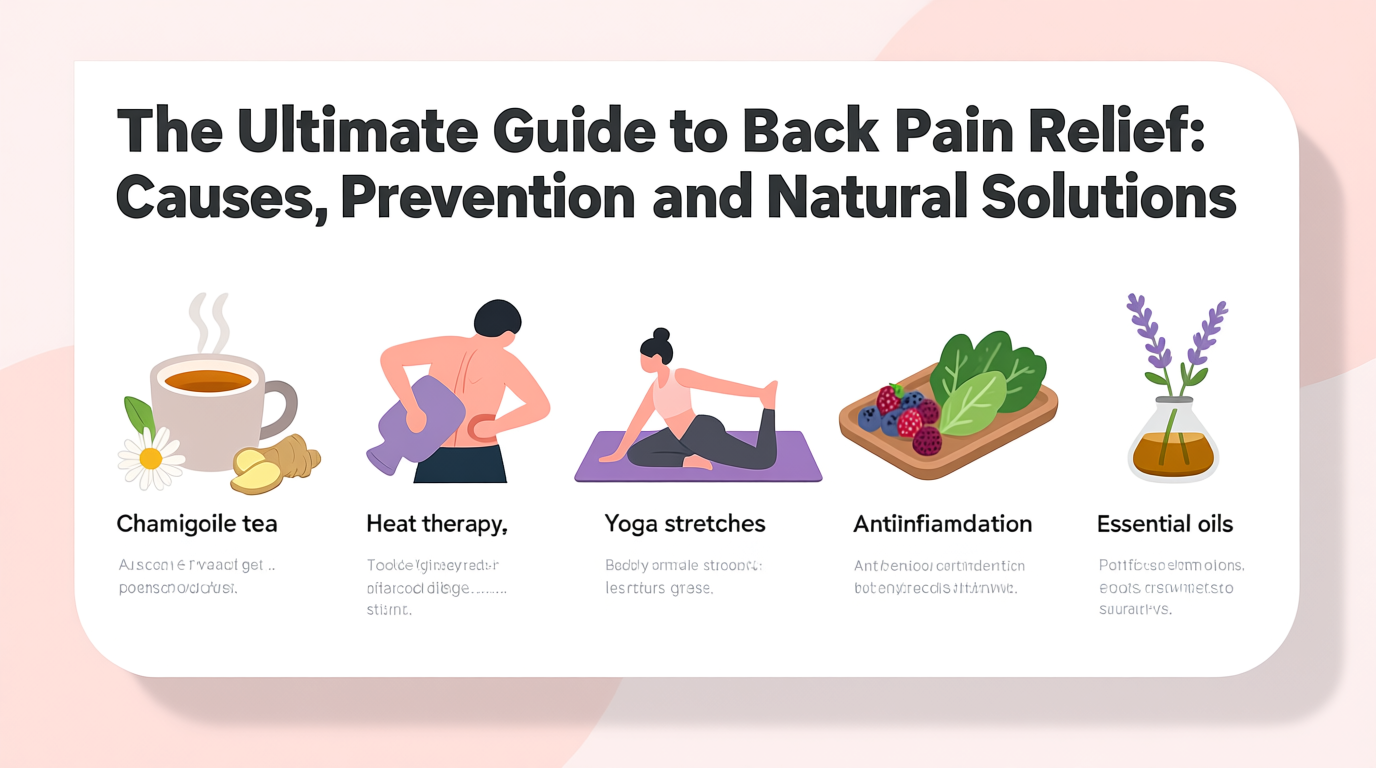
4. Natural Home Remedies for Back Pain Relief
You don’t always need medication for relief. Nature offers plenty of solutions.
Heat and Cold Therapy
- Cold packs help reduce inflammation after sudden injuries.
- Heat therapy relaxes muscles and improves blood flow for chronic pain.
Herbal Remedies & Natural Solutions
- Turmeric – Contains curcumin, a natural anti-inflammatory.
- Ginger – Reduces muscle soreness and stiffness.
- Epsom Salt Baths – Magnesium helps relax muscles.
Massage & Relaxation
- Self-massage with essential oils (peppermint or lavender)
- Foam rolling or tennis ball massage for tight spots
- Deep breathing and mindfulness to ease stress-related pain
👉 See more remedies in our post: Natural Home Remedies for Back Pain Relief.
5. Sleeping Positions for a Healthy Back
The way you sleep can make back pain worse—or help it heal.
Best Sleeping Positions
- On your back with a pillow under the knees – Maintains spine alignment.
- Side sleeping with a pillow between the knees – Reduces hip and spine pressure.
Sleeping Mistakes to Avoid
- Stomach sleeping (creates lower back strain)
- Using too-soft or too-hard mattresses
- Sleeping with unsupportive pillows
👉 Check out more adjustments in our detailed post: Best Sleeping Positions for Back Pain.
6. Daily Habits to Prevent Chronic Back Pain
Consistency is key when it comes to spine health. Small daily habits go a long way.
Movement & Exercise
- Walk at least 30 minutes a day.
- Practice core-strengthening exercises like planks.
Healthy Lifestyle Choices
- Maintain a healthy weight to reduce strain on the spine.
- Eat nutrient-rich foods that support bone health (calcium, magnesium, vitamin D).
Mind-Body Connection
- Reduce stress with yoga, meditation, or breathing exercises.
- Take regular breaks from sitting—every 30–60 minutes.
👉 Explore more habits in: Daily Habits to Prevent Chronic Back Pain
Conclusion
Back pain may be common, but it doesn’t have to control your life. By understanding the causes, correcting posture, stretching regularly, applying natural remedies, adjusting sleeping positions, and practicing healthy daily habits, you can achieve long-term relief.
This guide has given you a comprehensive overview, but for deeper dives into specific areas, check out our cluster articles linked throughout:
- Best Stretches for Lower Back Pain
- How Poor Posture Causes Back Pain (And Fixes)
- Natural Home Remedies for Back Pain Relief
- Best Sleeping Positions for Back Pain
- Daily Habits to Prevent Chronic Back Pain
With consistency and awareness, you can strengthen your spine, improve flexibility, and enjoy a pain-free lifestyle naturally.