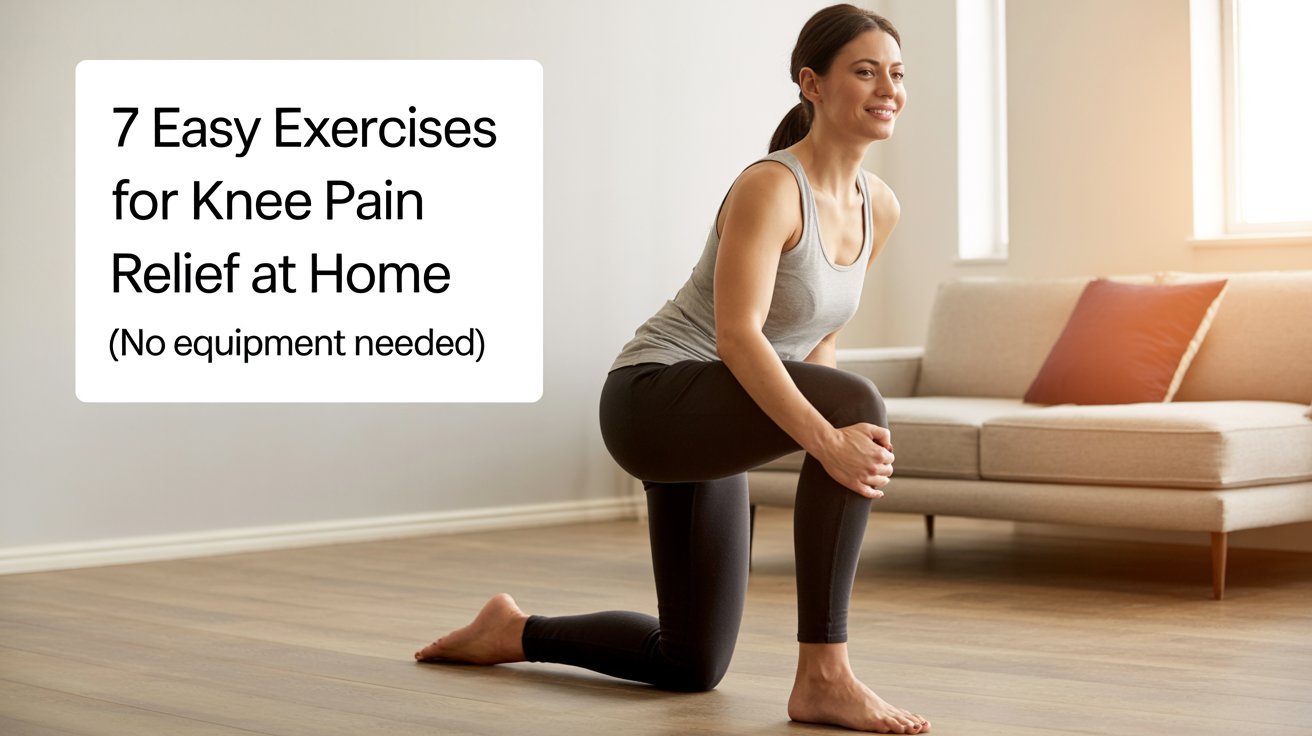
Does knee pain stop you in your tracks? You are not alone. Millions of people deal with knee discomfort daily, making simple tasks like walking, climbing stairs, or even standing for long periods a real challenge. This constant ache can truly impact your quality of life.
The good news is that relief is often within reach. You can find effective ways to ease your knee pain right from your living room. This guide offers simple, targeted movements that require no special gear at all. Just your body and a little space are enough.
You will discover common reasons for knee pain and how movement can help. We will also show you specific, easy-to-follow exercises. These steps can strengthen important muscles around your knee and make you more flexible.
Understanding Knee Pain and Its Causes
Common Reasons for Knee Discomfort
Knee discomfort comes from many places. It is helpful to know some common culprits, so you can work towards fixing them. Many issues can be improved with the right kind of activity.
Repetitive motions or suddenly doing too much activity can inflame your knee. This “overuse and strain” is common for people who increase their running or lifting without enough rest. Your body needs time to adapt to new demands.
Conditions like osteoarthritis and rheumatoid arthritis are big causes of knee pain. Osteoarthritis involves wear and tear, while rheumatoid arthritis is an autoimmune issue. Building strong muscles around your knee offers better joint support. This can help manage the symptoms.
Sometimes, injuries to ligaments or meniscus cause sharp pain. These are tears or sprains inside the knee joint. They often make your knee feel unstable or painful with certain movements.
Weak muscles around your knee are a major problem. If your quadriceps (front thigh), hamstrings (back thigh), and glutes (buttocks) are not strong enough, more stress lands on your knee joint. This lack of support can lead to chronic pain.
The Role of Exercise in Knee Pain Management
Exercise is a powerful tool for managing knee pain. It does more than just make you stronger. Movement helps your knees feel better and work properly.
Strong muscles around your knee act like natural shock absorbers. Your quadriceps, hamstrings, glutes, and calves help spread out the pressure. They also give your knee joint much-needed stability.
Gentle stretching and movement can greatly improve flexibility. This helps reduce stiffness that often comes with knee pain. Better flexibility means a wider, smoother range of motion for your knee.
Exercise also boosts blood flow to the area. This increased circulation helps bring fresh nutrients and carry away waste products. This process can help calm down inflammation and speed up healing.
Keeping a healthy weight is crucial for knee health, too. Every extra pound adds more stress to your knees. Regular exercise is a key part of any weight management plan.
7 Easy Exercises for Knee Pain Relief
These exercises are gentle and designed to be done anywhere. Remember to start slow and listen to your body.

Exercise 1: Quadriceps Sets
This exercise helps build strength in the front of your thigh without moving your knee joint. It’s a great starting point for many people.
- Sit or lie down with your legs stretched out in front of you.
- Tighten the muscles on the front of your thigh. Imagine pressing the back of your knee down into the floor or bed.
- Hold this squeeze for 5 to 10 seconds.
- Slowly relax your muscles.
- Repeat this action 10 to 15 times for each leg.
This move strengthens your quadriceps, which gives your knee better support. It does this without putting stress on the joint itself.
Exercise 2: Hamstring Sets
Now let’s work on the muscles at the back of your thigh. These are important for knee balance.
- Lie on your back. Bend your knees, keeping your feet flat on the floor.
- Press your heels into the floor. Try to drag them towards your buttocks without actually moving your feet.
- You will feel the muscles in the back of your thighs tighten. Hold this for 5 to 10 seconds.
- Then, let your muscles relax.
- Do this 10 to 15 times for each leg.
Strengthening your hamstrings helps balance out your quadriceps. This teamwork creates more stability for your knee.
Exercise 3: Straight Leg Raises
This exercise dynamically strengthens your quadriceps and also works your hip flexors.
- Lie on your back. Bend one leg, keeping that foot flat on the floor.
- Keep your other leg straight. Point your toes up.
- Tighten the thigh muscle of your straight leg. Then, slowly lift it a few inches off the floor. Keep your knee totally straight.
- Hold it up for a second, then slowly lower your leg back down.
- Do 10 to 15 repeats for each leg.
This exercise is excellent for building strength in your quadriceps. It helps maintain the ability to straighten your knee fully.
Exercise 4: Calf Raises
Strong calf muscles play a big role in how your leg absorbs shock. This helps reduce impact on your knees.
- Stand with your feet about hip-width apart. Grab a wall or chair for balance if needed.
- Slowly lift yourself onto the balls of your feet. Raise your heels as high as feels good.
- Hold that top position for a quick second. Then, slowly lower your heels back to the floor.
- Repeat this 15 to 20 times.
Strong calves improve your ankle strength and the way you walk and run. This can lower the stress your knees experience.
Exercise 5: Wall Sits
Wall sits are an effective way to build endurance in your quadriceps. It’s a tough, yet knee-friendly, move.
- Stand with your back against a wall. Your feet should be shoulder-width apart, about a foot away from the wall.
- Slowly slide down the wall. It should feel like you are sitting in an invisible chair. Keep your back flat against the wall.
- Go down until your knees are bent around a 45-degree angle. Only go as far as you can without pain.
- Hold this position for 20 to 30 seconds. Then, slowly push yourself back up.
- Try to do 3 to 5 repeats.
This exercise strengthens both your quadriceps and glutes. It does this without adding direct pressure to your knee joints.
Exercise 6: Hamstring Stretch
Tight hamstrings can pull on your knee, increasing pain. Gentle stretching helps improve flexibility.
- Sit on the floor. Stretch one leg straight out in front of you.
- Bend your other knee. Place the sole of that foot against your inner thigh of the straight leg.
- Keep your back straight. Gently lean forward from your hips towards your extended foot.
- You should feel a stretch in the back of your extended thigh. Hold it for 20 to 30 seconds.
- Repeat this 2 to 3 times for each leg.
This stretch boosts flexibility in your hamstrings. This helps lessen the tightness that can affect your knee.
Exercise 7: Quadriceps Stretch
Stretching the front of your thigh is also important. It can help reduce pain that occurs in the front of your knee.
- Stand up and hold onto a wall or chair for support.
- Bend one knee. Bring your heel up towards your buttocks.
- Gently grab your ankle or pant leg with the same hand.
- Pull your heel closer to your buttocks. Feel a stretch along the front of your thigh. Keep your knees close together and do not arch your back.
- Hold the stretch for 20 to 30 seconds.
- Repeat 2 to 3 times for each leg.
Improving quadriceps flexibility can bring relief from anterior knee pain. It keeps those front thigh muscles from getting too tight.
Important Considerations and When to Seek Professional Help
Listening to Your Body
Your body is excellent at sending signals. Pay close attention to what it tells you during these exercises. Being safe is always the top priority.
Exercises should never cause sharp or increasing pain. A mild stretch or feeling your muscles work is good. But if you feel a sharp jab, stop right away. Pain is your body’s way of saying something is wrong.
Always start slowly with any new routine. Do fewer repeats or hold for shorter times at first. As your strength grows, you can gradually do more. This gradual progression prevents new injuries.
Consistency really is key for the best results. Doing these exercises a few times a week is better than doing them all at once. Regular practice builds lasting strength and flexibility.
When to Consult a Doctor or Physical Therapist
While home exercises help many, sometimes you need expert advice. Knowing when to see a professional is very important for your health.
If your pain is severe, very intense, or came on suddenly for no clear reason, see a doctor. This could signal a more serious injury that needs immediate attention.
Notice any swelling or redness around your knee? These are signs of inflammation or possibly even infection. A healthcare provider should check this out quickly.
If you cannot put weight on your leg at all, or if it feels like your knee is giving way, seek help. These symptoms suggest instability or a significant injury.
Does your knee feel like it is locking up or catching? This can point to a meniscal tear or other internal joint problems. A doctor can diagnose these issues.
Finally, if you have tried these home exercises and rested, but your pain does not get better, it’s time for professional guidance. A physical therapist can create a personalized plan for you.
Conclusion
Finding relief from knee pain often begins with simple, consistent effort. The seven exercises we have covered, from Quadriceps Sets to Hamstring Stretches, are designed to build strength and improve flexibility. They target the muscles that support your knee, making the joint more stable and less prone to discomfort.
By regularly incorporating these easy, no-equipment movements into your routine, you can significantly contribute to better knee health. Stronger muscles mean less stress on your joints, and improved flexibility leads to greater comfort in daily activities. Remember to always listen to your body and never push through sharp pain. If your knee pain is persistent, severe, or comes with concerning symptoms, do not hesitate to reach out to a doctor or physical therapist. Take charge of your knee health today, one gentle movement at a time.